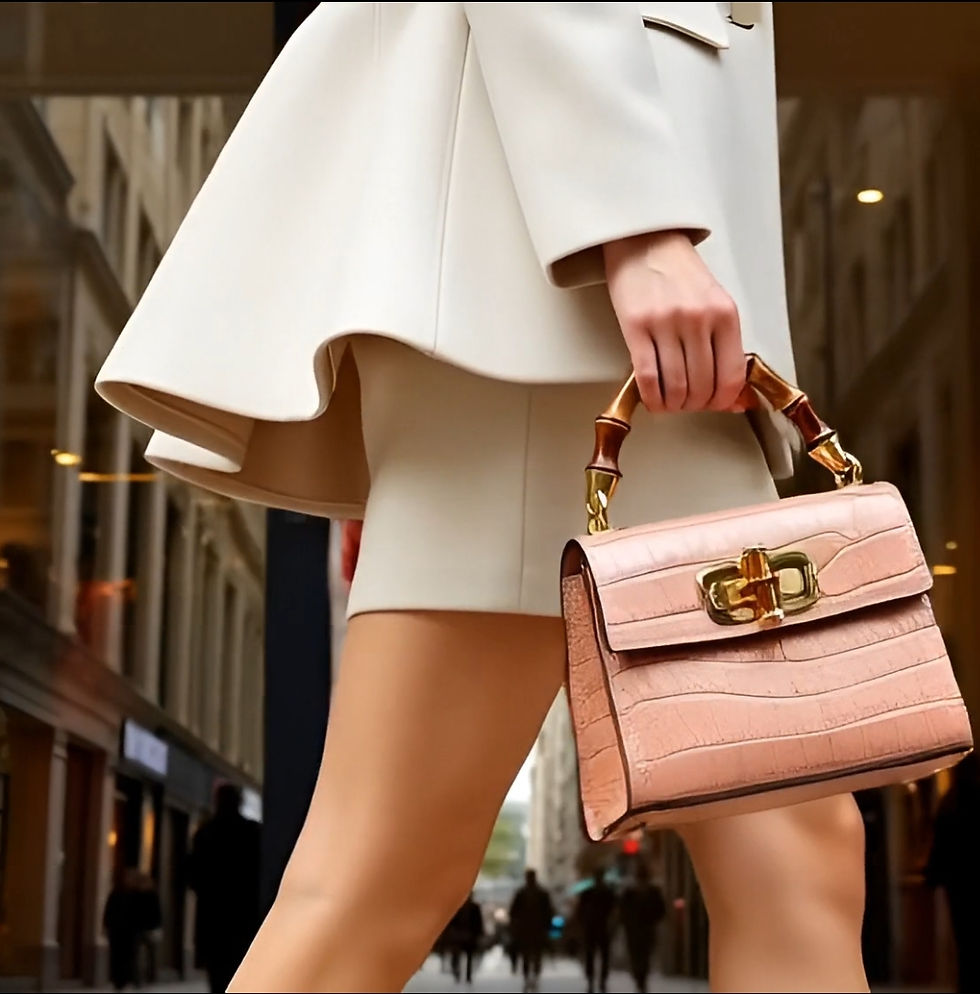
Why choose Italian leather - the key to timeless luxury
Updated: May 13


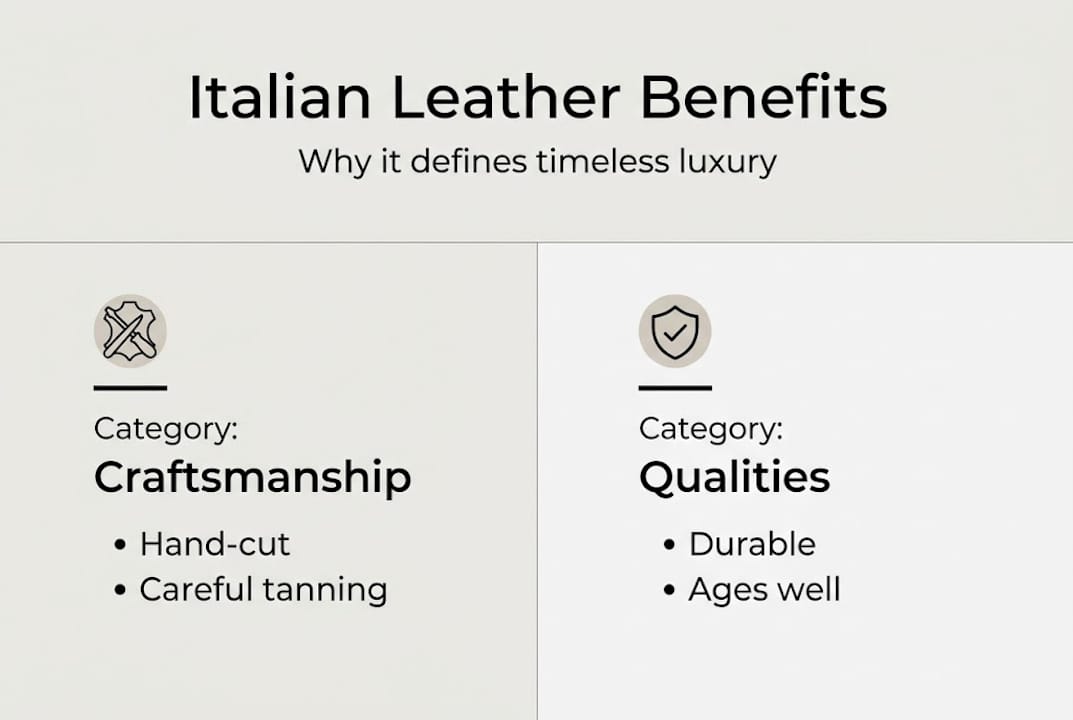
Italian leather is valued for centuries-old craftsmanship and natural tanning techniques.
Authentic Italian leather develops a unique patina, aging gracefully over time.
Spotting genuine Italian leather involves examining labels, texture, flexibility, and craftsmanship details.
There is a quiet but persistent misconception in the world of luxury fashion: that a high price tag guarantees exceptional quality. Walk into almost any department store, and you will encounter beautifully packaged accessories labeled as “luxury” that, upon closer inspection, reveal little of the soul or skill that defines true refinement. Italian leather stands apart from that noise entirely. It is not merely a material choice; it is a philosophy, a lineage, and an artistic tradition passed down through generations of master artisans who understand that genuine elegance cannot be rushed or replicated. This guide will show you exactly what makes Italian leather so extraordinary, how to recognize it, and why it deserves a permanent place in your wardrobe.
Table of Contents
Key Takeaways - why choose italian leather
Point | Details |
Artisanal quality | Italian leather is crafted with skills and methods passed down through generations, ensuring unmatched excellence. |
Timeless investment | Choosing Italian leather accessories means enjoying pieces that stay stylish and last for many years. |
Recognize authenticity | Key details like texture, smell, and labeling help you identify genuine Italian leather and avoid imitations. |
Sustainable elegance | Italian leather production often supports ethical practices and environmental responsibility. |
What makes Italian leather unique
To understand Italian leather, one must first appreciate where it comes from, not just geographically, but culturally. Italy’s leather-making tradition stretches back centuries, rooted in regions like Santa CroceSull’arno in TuscanyAnd the artisan workshops of Florence and Milan. These areas developed tanning techniques long before modern industry existed, relying on natural substances, particularly vegetable tannins derived from tree bark, to transform raw hides into supple, breathable, and richly textured leather.
What separates Italian leather from its mass-produced counterparts is the tanning process itself. Most commercial leathers are chrome-tanned, a method that takes days and prioritizes speed over quality. Italian artisans, by contrast, often use vegetable tanning, a process that can take weeks or even months. The result is leather that is firmer initially but grows softer, more lustrous, and deeply personal with wear. Each piece develops what connoisseurs call a patina, a unique surface character that tells the story of its owner’s life.
The dyeing process is equally intentional. Italian tanneries favor natural, penetrating dyes that saturate the leather at its core rather than coating the surface. This means color remains vibrant far longer and does not crack or peel the way synthetic finishes do. Italian leather is regarded as a benchmark due to its superior tanning traditions and material selection, a reputation earned through centuries of refinement rather than marketing.
“Italian leather does not simply age. It evolves, becoming more beautiful and more individual with every passing season.”
Beyond process, there is material integrity. Italian artisans are exceptionally selective about the hides they source, prioritizing full-grain and top-grain leathers that preserve the hide’s natural surface. This commitment to slow craftsmanship, to choosing depth over convenience, is precisely what you experience when you hold a piece of what is Italian leather in your hands. You feel not just texture, but intention.
Feature | Italian leather | Mass-produced leather |
Material | Full-grain or top-grain | Split or bonded leather |
Process | Natural vegetable tanning | Chrome or chemical tanning |
Age gracefully? | Yes, develops rich patina | No, cracks or fades |
Origin transparency | High | Often unclear |
Why fashion houses trust Italian leather
Let’s consider why the most celebrated names in fashion, from heritage Italian houses to contemporary luxury labels, return to Italian leather season after season. The answer is not simply tradition; it is a convergence of consistent quality, exclusive sourcing, and an almost sacred commitment to excellence that no other region has matched.
timeless handcrafted leather has become synonymous with the identity of luxury fashion itself. When a design house crafts a signature handbag, they require leather that photographs beautifully, holds its structure across years of use, and communicates status at a glance. Italian leather delivers all three. Its natural sheen, its precise grain structure, and its ability to be worked into intricate shapes without losing integrity make it the material of choice for the world’s most exacting creative directors.
"“”"“"” “"”""" luxury houses select Italian leather for its unparalleled quality and prestige, a choice that reflects not only aesthetics but also the values a brand wishes to project.
Here is what consistently draws the world’s finest fashion houses to this material:
Heritage and provenance: Italian tanneries often operate for generations, passing down proprietary techniques that cannot simply be copied or outsourced.
Material exclusivity: Only the finest hides meet Italian quality standards, making each piece genuinely scarce and special.
Color depth and range: The dyeing expertise of Italian tanneries produces colors of extraordinary richness, from deep burgundy to warm caramel and classic noir.
Status and recognition: A well-crafted Italian leather bag or shoe signals taste and discernment to those who appreciate true luxury.
Consider the accessory landscape: bags, shoes, wallets, belts, and gloves crafted from Italian leather carry an immediate visual authority. One exquisite example of how this material translates into wearable art can be seen in the sculptural elegance of an Italian leather luxury bag example, where form, material, and artistry converge.

Material | Quality consistency | Ages well | Status | Price range** |
Italian leather | Very high | Yes | Very high | Premium |
French leather | High | Yes | High | Premium |
Generic leather | Variable | No | Low to medium | Mid-range |
PU/synthetic | Low | No | Low | Budget |
How to recognize authentic Italian leather
Now that you know why top designers prefer Italian leather, here is how you can make sure you are investing in the real thing. The market, regrettably, is full of imitations that look convincing at a glance but reveal their limitations within months. Learning to distinguish genuine Italian leather is one of the most empowering skills any fashion-conscious woman can develop.
There are tangible signs of real leather that help discerning buyers separate authentic Italian leather from clever imitations, and they are more accessible than you might expect.
Here is a practical checklist for authenticating your purchase:
Check the label: Look for phrases like “vera pelle” (genuine leather) or “cuoio” (cowhide leather) on the product label. Italian-made goods often include the country of origin on interior tags.
Feel the texture: Real Italian leather has a natural, slightly irregular grain. It feels warm and alive to the touch, not plasticky or perfectly uniform.
Test the flexibility: Hold the piece and bend it gently. Italian leather flexes without cracking and returns to shape naturally, revealing its supple structure.
Look at the edges: Well-crafted Italian leather features burnished, painted, or rolled edges that are smooth and finished with care. Raw, fraying, or suspiciously perfect machine-pressed edges may signal inferior material.
Check for authentication certificates: Many reputable artisan brands and retailers provide certificates of authenticity or origin documentation. Do not hesitate to request this.
Pro tip: When shopping online, look for detailed product descriptions that specify the type of tanning (vegetable vs. chrome), the region of origin in Italy, and the grade of hide. Understanding what real leather is made of gives you an immediate advantage when evaluating any accessory’s true worth.
Red flags include prices that seem implausibly low for Italian leather, vague or absent product descriptions, and surfaces that feel stiff or smell strongly of chemicals. Trust your instincts, and trust the knowledge you carry.
The benefits of Italian leather accessories
Knowing how to spot the real thing is just the start. Here is why choosing Italian leather is a smart, deeply rewarding investment for your wardrobe, one that pays returns in beauty, sustainability, and lasting elegance.
Italian leather is valued for durability, elegance, and ethical sourcing, qualities that align perfectly with the values of the modern, thoughtful woman who refuses to compromise between style and substance.
The advantages of choosing Italian leather are profound and layered:
Style that transcends seasons: A well-made Italian leather bag or pair of shoes does not belong to any single trend cycle. It looks as relevant in a decade as it does today.
The gift of patina: Unlike synthetic alternatives, Italian leather grows more beautiful with age. Each scratch, each gentle crease becomes part of the piece’s unique character.
Long-term durability: Quality leather, properly cared for, can last twenty or thirty years. This is not just elegance; it is economy measured across time.
Environmental integrity: Because Italian leather lasts so long and is sourced with care, investing in it actively counters the cycle of disposable fashion. This is slow fashion in its most meaningful form.
Investment value: A classic Italian leather handbag, much like the mastering Italian leather handbags principle teaches us, can hold or even appreciate in value over time, particularly when it comes from a reputable artisan maker.
Pro tip: To preserve the beauty of your Italian leather accessories, clean them gently with a soft, barely damp cloth, then apply a high-quality leather conditioner two to four times a year. Store pieces in breathable dust bags rather than plastic, and keep them away from prolonged sunlight to protect the natural dye. This simple ritual can extend the life of a piece by decades.
The beauty of artisan Italian craftsmanship lies in this very philosophy: that what is made slowly, with care and intention, enriches life rather than cluttering it.
Our take: The real secret behind Italian leather’s allure
We believe the true power of Italian leather lies not in its measurable qualities, though those are extraordinary, but in what it communicates about the woman who carries it. There is a concept we find endlessly compelling: quiet luxury. Not the kind that shouts through logos, but the kind that whispers through texture, weight, and impeccable detail.
When you hold a piece of handcrafted Italian leather, you are holding something made by hands that knew what they were doing, guided by knowledge older than any trend report. That feeling, of substance and intention in your palm, is irreplaceable. The woven leather quiet luxury philosophy captures this beautifully: true elegance is never about volume. It is about depth.
We would gently challenge the idea that trend-driven fashion is the pinnacle of personal style. The most memorable women in fashion history were not defined by what was popular at the time, but by the exquisite, considered pieces they chose to carry through the years. Italian leather invites you into that same legacy.
Elevate your style with authentic Italian leather
Inspired to add Italian leather to your collection? We curate a carefully selected range of handcrafted leather accessories, each chosen for its authenticity, craftsmanship, and enduring elegance. At vivienlauren.co.uk, every piece reflects the Italian tradition of slow, considered making.

Discover our full selection of shop Italian leather accessories and find the piece that speaks to your personal story. Whether you are drawn to a sculptural tote, a refined crossbody, or a beautifully crafted clutch, each item is chosen to last a lifetime, not a season. And for those moments when your accessories deserve an equally elegant companion, explore our collection of occasion dresses to complete the look with grace. Quality over quantity, always.
frequently asked questions
How can I verify if a product is made from genuine Italian leather?
Look for Italian-language labels like “vera pelle,” request certificates of authenticity, and examine craftsmanship details such as edge finishing and natural grain texture. A thorough guide on identifying real Italian leather through labels and features can help you shop with real confidence.
Are Italian leather accessories a good investment?
Absolutely. Italian leather goods maintain their beauty and can increase in value over time thanks to their exceptional durability and enduring classic style. As explored in investing in luxury tote bags, quality leather is one of fashion’s most reliable long-term investments.
Does Italian leather require special care?
Italian leather responds beautifully to gentle cleaning with a soft cloth and periodic conditioning with a dedicated leather cream. The craftsmanship guide for leather handbags offers specific care advice to help your pieces retain their splendor for decades.
What colors and finishes are most popular for Italian leather?
Classic shades like black, warm tan, and rich burgundy in smooth or pebbled finishes remain perennial favorites for their versatility and timeless appeal. The world of woven leather and quiet luxury beautifully illustrates how these tones translate into accessories of enduring elegance.
Recommended
This fashion article has been authored and brought to you by Chloe. On behalf of Vivien Lauren. Vivien Lauren. Luxury. Craftsmanship. That's Proudly Italian. Vivien Lauren. Proud To Style.