
Why invest in artisan craftsmanship for Italian luxury

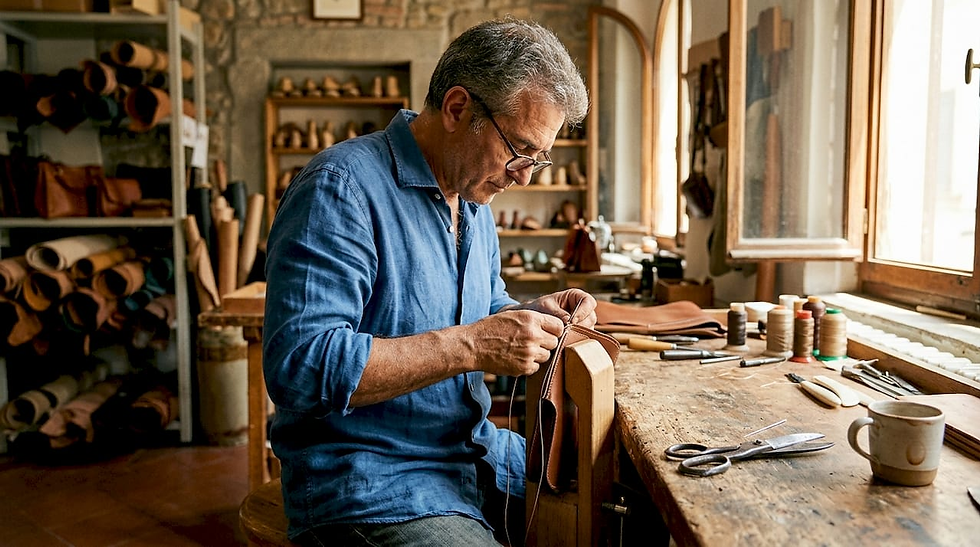
Italian artisan hand-stitching leather in workshop
Not all luxury fashion delivers the same quality. Many prestigious labels rely on marketing rather than genuine craftsmanship, leaving consumers confused about what truly defines superior apparel. Artisan craftsmanship represents a different approach entirely, rooted in hand techniques like manual leather working and generational skills passed down through Italian artisan families. This guide reveals why investing in handcrafted Italian pieces offers unmatched quality, exclusivity, and sustainability that mass-produced luxury simply cannot replicate.
Table of Contents
Key takeaways - Why invest in artisan craftsmanship
Point | Details |
Artisan craftsmanship definition | Hand techniques and generational skills unique to Italy create pieces with superior material handling and precision |
Investment value | Lower cost-per-wear through durability and repairability supports ethical, sustainable fashion choices |
Longevity advantage | Handcrafted goods outlast mass-produced luxury with better aging and repair potential |
Rare skill preservation | Supporting artisan craftsmanship protects disappearing traditional techniques in our modern age |
Understanding artisan craftsmanship in Italian luxury apparel
Artisan craftsmanship in Italian fashion goes far beyond simple handwork. It represents a complete philosophy where skilled artisans apply techniques refined over generations to create pieces with character and precision that machines cannot achieve. These craftspeople work with natural materials like leather, where no two skins share identical grain patterns or texture, requiring expert judgment and adaptation at every stage.
The techniques themselves tell a compelling story. Manual leather working, quilting, and generational skill transmission ensure superior material handling impossible to replicate through industrial processes. An artisan examines each leather hide personally, identifying the strongest sections for structural elements and the most beautiful grain for visible surfaces. This level of attention creates garments and accessories that feel alive rather than uniform.
Generational knowledge transfer preserves quality standards that would otherwise disappear. Master craftspeople in Italian ateliers spend years training apprentices in subtle techniques like hand-stitching tension, leather skiving angles, and natural dye application. This human chain of knowledge creates consistency across decades while allowing individual artisan signatures to emerge. The result is Italian style timeless elegance that transcends temporary trends.
In our fast-advancing modern age, supporting this rare skill set becomes increasingly vital. Many traditional techniques face extinction as older artisans retire without successors. Industrial efficiency pressures workshops to abandon time-intensive methods in favor of speed. Yet these disappearing skills represent irreplaceable cultural heritage and produce quality unmatched by contemporary alternatives.
Pro Tip: When selecting artisan pieces, examine visible handwork details like irregular but consistent stitching, natural edge finishing, and subtle variations in texture that signal genuine craftsmanship rather than machine precision.
The uniqueness of natural materials amplifies artisan value. Unlike synthetic fabrics cut from identical rolls, leather hides vary in thickness, grain pattern, and natural markings. Skilled artisans transform these variations into design features rather than defects, creating one-of-a-kind pieces. This approach to Italian leather handbags craftsmanship ensures your investment remains truly exclusive.
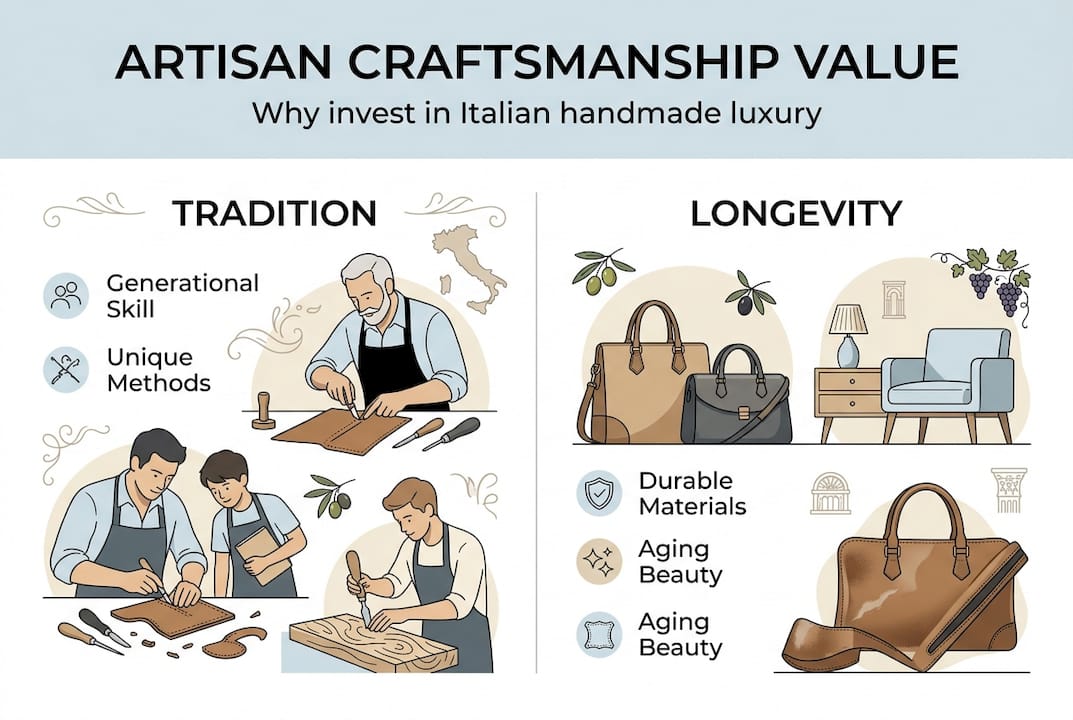
The long-term value of investing in handcrafted luxury apparel
Cost-per-wear analysis reveals the financial wisdom of artisan investments. A $1460 Loro Piana sweater worn 56 times yearly costs $14 per wear in year one, dropping to $4.76 by year three. Compare this to a $200 fast fashion sweater worn 15 times before deteriorating, costing $13.33 per wear with no longevity. The premium piece delivers superior value while supporting ethical local economies.
Investment Type | Initial Cost | Wears Year 1 | Cost Per Wear Year 1 | Wears Year 3 | Cost Per Wear Year 3 |
Artisan luxury sweater | $1460 | 56 | $26.07 | 168 | $8.69 |
Mass-produced luxury | $800 | 30 | $26.67 | 60 | $13.33 |
Fast fashion | $200 | 15 | $13.33 | 15 | $13.33 |
Durability stems from superior construction methods and material selection. Artisan pieces use reinforced stress points, hand-finished seams that flex rather than tear, and premium fibers that improve with age. A well-crafted leather handbag develops richer patina over decades rather than cracking after seasons. This longevity transforms luxury from expense into investment.
Repairability extends lifespan dramatically beyond disposable fashion. Artisan construction allows skilled cobblers and tailors to replace worn components, restitch seams, and refresh finishes without compromising structural integrity. Many Italian workshops offer lifetime repair services for their pieces, ensuring decades of use. This contrasts sharply with bonded seams and synthetic materials in mass production that cannot be meaningfully repaired.
Ethical and sustainability benefits align with conscious consumer values. Artisan production supports sustainable fashion materials and local craftspeople earning fair wages in dignified working conditions. Small-batch production minimizes waste compared to industrial overproduction that fills landfills. Each purchase preserves traditional skills and communities rather than feeding exploitative supply chains.
Store pieces properly in breathable fabric bags away from direct sunlight and humidity
Rotate wearing luxury items to allow natural fibers to rest and recover between uses
Address minor damage immediately before it worsens through professional repairs
Follow caring for leather handbags guidelines to maintain appearance and structure
Invest in quality hangers and shoe trees that preserve garment shape during storage
Pro Tip: Build your wardrobe around timeless styles in neutral colors that transcend seasonal trends, reducing the temptation to replace pieces unnecessarily and maximizing cost-per-wear value over years.
Challenges and misconceptions about luxury and artisan products
Luxury branding often obscures actual quality differences. Prestigious labels command premium prices based on logo recognition rather than superior materials or construction. Consumers assume expensive equals excellent, yet luxury brands sometimes hike prices while reducing quality, generating complaints from longtime customers noticing declining standards. The brand bubble inflates perceived value beyond tangible craftsmanship.
Interestingly, artisan goods sometimes cost less than mass-luxury alternatives despite superior quality. A handcrafted leather bag from a small Italian workshop might retail for $600 while a similar-sized branded bag costs $2000, with the price difference funding marketing campaigns rather than better materials. This pricing paradox confuses shoppers conditioned to equate higher prices with better quality.
Aspect | Mass-Luxury Production | Artisan Craftsmanship |
Construction method | Machine assembly, standardized processes | Hand techniques, individual artisan judgment |
Material selection | Bulk purchasing, consistency prioritized | Selective sourcing, natural variation embraced |
Quality control | Statistical sampling, acceptable defect rates | Individual piece inspection, zero tolerance |
Pricing basis | Brand value, marketing costs | Material cost, skilled labor time |
Repairability | Limited, often bonded construction | Designed for repair, traditional methods |
Exclusivity | Mass production in thousands | Small batches, unique variations |
Common myths about luxury pricing deserve examination:
Higher prices always indicate better quality and materials
Brand heritage guarantees consistent craftsmanship standards
Machine precision surpasses human handwork in luxury goods
Artisan products lack the refinement of established luxury houses
Sustainability claims from major brands match artisan workshop practices
Supply chain challenges affect even Italian artisan production. Some workshops face pressure to cut costs through exploitative labor practices or outsourcing to lower-wage regions while maintaining “Made in Italy” labels. Transparency becomes crucial when evaluating artisan claims. Reputable craftspeople openly discuss their processes, source materials locally, and maintain direct relationships with customers.
The couture craftsmanship explained approach contrasts sharply with industrial luxury production. True artisan work prioritizes technique mastery and material respect over profit margins. Understanding this distinction helps consumers navigate marketing claims and identify genuine quality. The timeless fashion selection process requires looking beyond labels to construction details and provenance.
Enhancing elegance and longevity: care and the art of earned beauty
Earned beauty distinguishes artisan pieces from mass-produced alternatives. Natural patina develops as leather ages, creating unique character impossible to replicate artificially. This patina represents genuine use and care rather than artificial aging techniques applied at manufacture. Each scratch and color variation tells your personal story with the piece.
Fiber quality creates interesting initial characteristics that reward patience. Finer fibers like baby cashmere at 13.5 microns pill more initially but excel in softness and longevity with proper care. This temporary pilling concerns some buyers unfamiliar with natural fiber behavior, yet it signals premium materials rather than defects. After initial wear, these fibers stabilize into exceptionally durable, luxurious textiles.
Repairability determines maximum lifespan potential. Artisan construction using traditional methods allows skilled craftspeople to disassemble, repair, and reassemble pieces multiple times over decades. Stitched rather than glued seams can be reopened and restitched. Leather components can be replaced while preserving the original structure. This serviceability transforms garments and accessories into heirlooms.
“True patina cannot be rushed or faked. It emerges from the marriage of quality materials, skilled construction, and thoughtful use over time. This earned beauty represents the highest expression of artisan craftsmanship, where age enhances rather than diminishes value.”
Care best practices preserve and enhance artisan pieces:
Clean leather goods with pH-neutral products designed for natural materials, avoiding harsh chemicals
Condition leather quarterly using natural oils that nourish rather than coat the surface
Brush natural fiber garments gently after wearing to remove surface dirt and restore texture
Address stains immediately with appropriate treatments before they set permanently
Professional cleaning for delicate pieces ensures proper handling of specialty materials
Rotate pieces regularly to prevent overuse and allow natural fibers to recover
Pro Tip: When purchasing artisan pieces, prioritize designs with classic silhouettes and construction methods that age beautifully, like vegetable-tanned leather that darkens richly and hand-stitched seams that can be refreshed indefinitely.
The leather handbag care approach extends to all artisan goods. Understanding material properties helps you make informed decisions about use and maintenance. Natural materials respond to environment and handling, developing character that synthetic alternatives cannot match. This living quality makes handcrafted leather elegance increasingly valuable over time.
Storage conditions significantly impact longevity. Leather requires breathable storage away from humidity extremes that cause mold or cracking. Natural fibers need protection from moths using cedar or lavender rather than chemical repellents. Proper hanging prevents stretching and creasing that damages garment structure. These simple practices preserve your investment for decades.
Explore exclusive handcrafted fashion at Vivien Lauren
Discovering artisan-crafted luxury becomes effortless when you explore collections designed around timeless elegance and Italian craftsmanship traditions. Vivien Lauren curates exceptional pieces that embody the principles discussed throughout this guide, from handcrafted leather accessories to elegant apparel created using generational techniques.

Each piece in the collection reflects commitment to sustainability, exclusivity, and superior quality that improves with age. Browse curated dresses showcasing elegant silhouettes in timeless colors, or discover the exceptional craftsmanship of the handmade woven leather bucket bag that exemplifies artisan techniques. These investments deliver the cost-per-wear value and earned beauty that transform luxury from expense into heritage.
FAQ
Why should I choose artisan-crafted luxury over mass-produced clothing?
Artisan pieces offer genuine uniqueness through handwork that ensures superior quality and exclusivity impossible in factory production. Each item carries individual character from the craftsperson’s techniques and natural material variations. Supporting artisan craftsmanship also sustains ethical, sustainable local practices and preserves rare skills threatened by industrial fashion.
How can I care for my artisan leather handbags to ensure longevity?
Use gentle pH-neutral cleaning products and natural conditioners quarterly to nourish leather without coating the surface. Store handbags in breathable fabric bags away from humidity extremes and direct sunlight that cause fading or cracking. Following the complete leather handbag care guide ensures your investment develops beautiful patina while maintaining structural integrity for decades.
Are artisan-crafted Italian luxury pieces more sustainable than fast fashion?
Absolutely. Artisan pieces deliver dramatically lower cost-per-wear through extended lifespan, reducing waste compared to disposable fast fashion that fills landfills after minimal use. The production process supports local artisan communities with fair wages and dignified working conditions rather than exploitative supply chains. Repairability extends usable life by decades, making artisan luxury the most sustainable fashion choice.
What makes Italian artisan craftsmanship unique compared to other luxury production?
Italian workshops maintain generational skill transmission where master craftspeople train apprentices in techniques refined over centuries. This human knowledge chain creates consistency while allowing individual artisan signatures to emerge in each piece. The combination of superior natural materials, time-intensive hand techniques, and cultural heritage produces quality and character unmatched by industrial luxury production anywhere in the world.
How do I verify genuine artisan craftsmanship when shopping?
Examine visible handwork details like slightly irregular but consistent stitching, natural edge finishing, and subtle texture variations that signal human craftsmanship rather than machine precision. Research the workshop’s history and production methods, looking for transparency about artisan training and local material sourcing. Reputable craftspeople openly discuss their processes and maintain direct customer relationships rather than hiding behind marketing claims.
Recommended

Handcrafted Red Ankle Strap Heels by Vivien Lauren 
Handmade Soot Black Velvet Ballet Flats - Italian Designs by Vivien Lauren 
Pom Pom Mule Shoes - Sliders by Vivien Lauren 
Lady models Handcrafted suits and Luxury Leather Bucket Bags by Vivien Lauren
This fashion guide on Why invest in artisan craftsmanship, has been written for you by Nancy. Paying Homage to Italian Craftsmanship. On behalf of Vivien Lauren. Vivien Lauren. Luxury. Craftsmanship that's Proudly Italian. Vivien Lauren. Proud To Style.


