
Why Choose Italian-Made Fashion: A Luxury Woman's Guide

Vivien Lauren. Emphasis on craftsmanship.
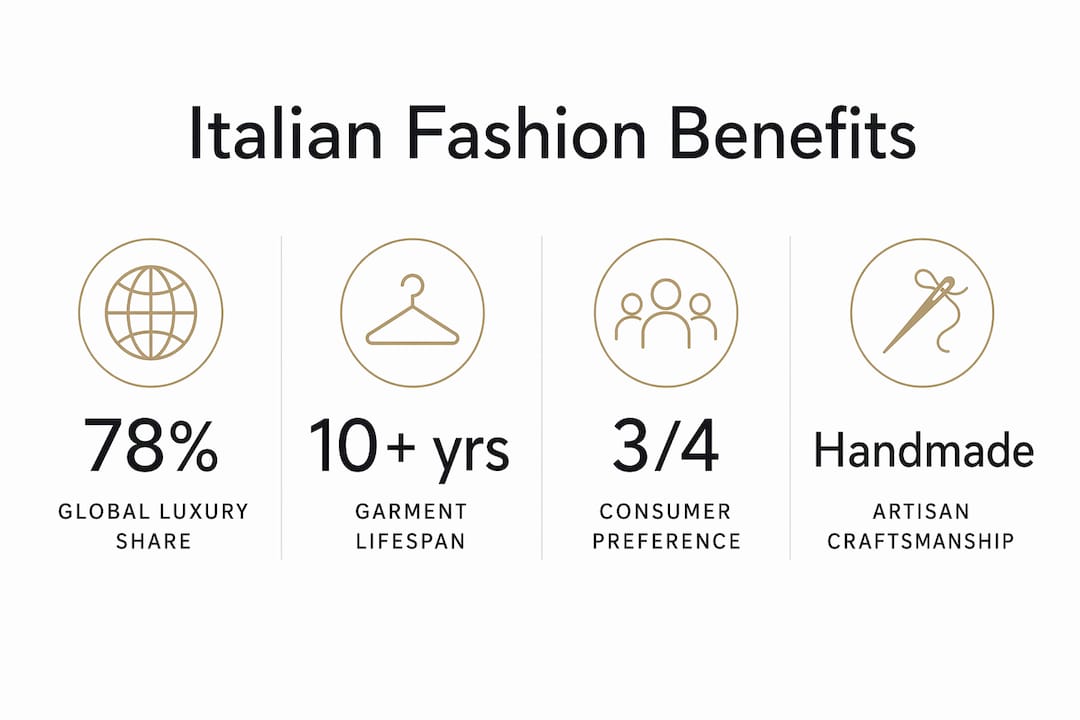
Italian-made fashion reflects a centuries-old tradition of craftsmanship, quality materials, and timeless design. It drives Italy’s economy with about 78% of global luxury fashion production, emphasizing regional expertise and artisanal skill. Consumers benefit from durable, repairable garments with traceability, offering long-lasting value and sustainable style.
Italian-made fashion is defined by a centuries-old tradition of artisan craftsmanship, exacting material standards, and a design philosophy that places the human form at its center. For women who value quality over quantity, understanding why choose Italian-made fashion means recognizing something deeper than a label. It means choosing garments that carry the weight of generations of skill, the integrity of transparent production, and a timeless elegance that no fast-fashion formula can replicate. This guide explores the economic significance, the artisan soul, and the very real practical advantages that make Italian fashion the gold standard for discerning women worldwide.
Why choose Italian-made fashion: the economic case for quality
Italian fashion is not simply a cultural preference. It is a global economic force. Italian fashion accounts for approximately 5% of Italy’s GDP and produces roughly 78% of global luxury fashion. That concentration of production in a single country is extraordinary, and it exists precisely because the quality cannot be replicated at scale elsewhere.
The fashion hubs of Milan, Florence, and Rome each play a distinct role in this ecosystem. Milan anchors the commercial and editorial side of the industry. Florence is the spiritual home of leather goods and artisan workshops. Rome carries the legacy of haute couture and theatrical femininity. Together, they form a triangle of influence that shapes how the world perceives luxury.
Consumer perception reflects this reality with remarkable consistency. Three out of four consumers find Italian products highly attractive, and 65% specifically associate that attractiveness with fashion. That is not brand loyalty built through advertising. It is trust earned through decades of consistent, exquisite output.
Country | Share of global luxury fashion production | Key fashion hubs |
Italy | ~78% | Milan, Florence, Rome |
France | Significant, primarily haute couture | Paris |
United Kingdom | Niche luxury tailoring | London, Edinburgh |
United States | Contemporary luxury | New York, Los Angeles |
Italy’s dominance in this table is not accidental. It reflects a manufacturing culture that has resisted the temptation to industrialize at the expense of quality.
How does artisan craftsmanship distinguish Italian-made fashion?
The word “craftsmanship” is used freely in fashion marketing, but Italian craftsmanship carries a specific and verifiable meaning. Tailoring houses like Kiton and Brioni invest more than 30 hours of specialized hand labor per jacket. That figure alone separates Italian luxury from anything produced on a conventional assembly line.
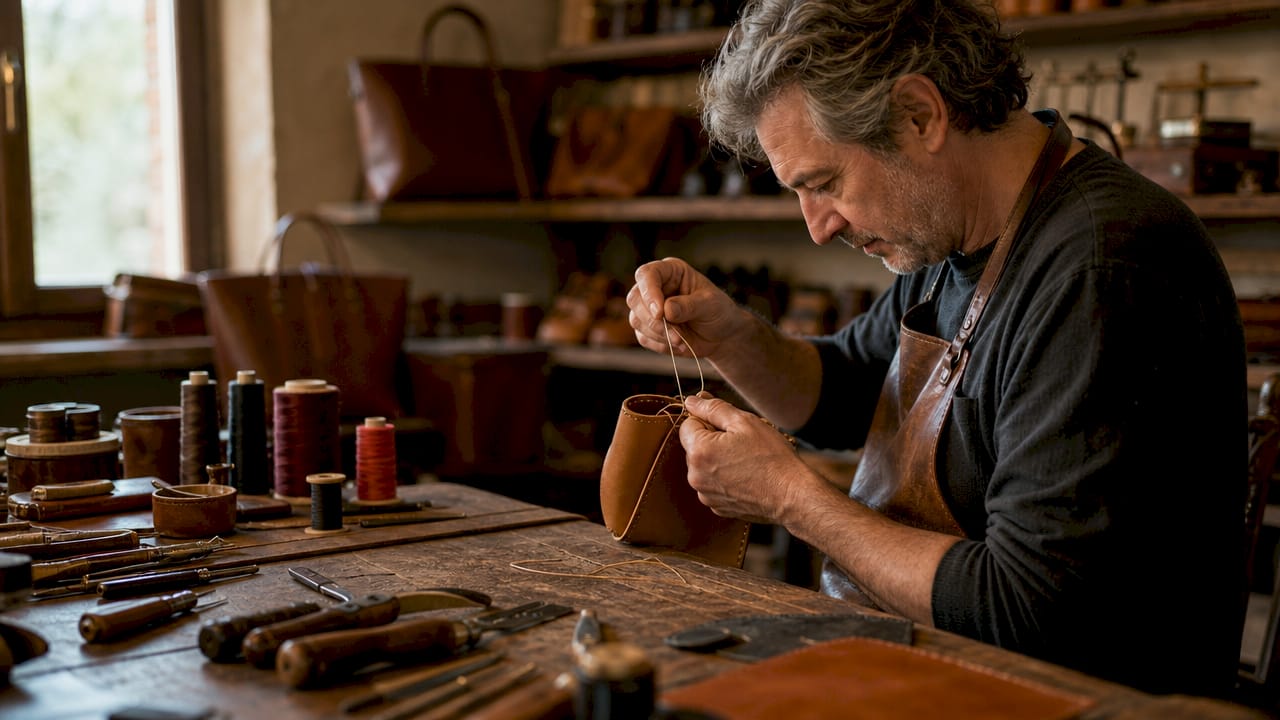
The regional specialization model deepens this quality further. Italian fashion manufacturing uses a district model with geographic clusters specialized by product type: leather goods in Florence, silk weaving in Como, footwear in Marche. Each region has spent generations refining a single discipline. The result is a level of integrated expertise that a generalist factory simply cannot match.
Material selection is equally uncompromising. Italian luxury brands reject entire batches of fabric or leather if they do not meet exacting standards, even when flaws are invisible to the naked eye. This practice seems extreme until you understand its purpose: consistency of performance over years of wear, not just months.
The raw materials themselves travel the world before arriving in Italian workshops. Silks from China, cashmere from Mongolia, and wools from Australia are woven in Italy using techniques refined over centuries. The origin of the fiber matters less than the mastery applied to it.
Hand-finishing: Buttonholes are cut and sewn by hand, seams are pressed individually, and linings are attached with the kind of attention that machines cannot replicate.
Family-run workshops: Many of Italy’s finest producers are family businesses where skills pass from parent to child, preserving techniques that predate industrialization.
Regional expertise: The artisan craftsmanship in Italian luxury is not a marketing story. It is a geographic and generational reality.
Quality control: Proximity between suppliers, weavers, and tailors within each district allows for real-time quality checks at every stage of production.
Pro Tip: When evaluating an Italian garment, turn it inside out. The quality of the interior finishing, including the seam allowances, the lining attachment, and the button reinforcement, reveals far more about its true craftsmanship than the exterior ever will.
What cultural and stylistic principles define Italian fashion?
Italian fashion is not simply well-made clothing. It is a philosophy about how a woman should move through the world. Italian tailoring emphasizes soft, unstructured fitting that prioritizes the human body and natural movement, with softer shoulders, natural waist definition, and sleeves angled for actual use. This is the antithesis of garments designed to look good on a hanger.
The cultural principles that shape this approach are worth understanding in their own right:
Timelessness over trend: Italian designers build collections around enduring silhouettes rather than seasonal novelties. A well-chosen Italian piece from five years ago reads as current today because it was never designed to expire.
Comfort as elegance: The Italian understanding of timeless elegance in Italian style holds that a woman who moves with ease is more beautiful than one who is constrained by her clothing. Comfort and sophistication are not opposites.
Identity over uniformity: Italian fashion resists the mass-market impulse toward standardized sizing and generic aesthetics. Each piece is conceived with a specific woman in mind, one who knows herself and dresses accordingly.
Craft as cultural expression: Fashion in Italy is not separate from art, architecture, or cuisine. It is part of the same national conversation about beauty, proportion, and the good life.
This philosophy stands in sharp contrast to fast fashion, which treats clothing as disposable and the wearer as interchangeable. Italian fashion treats both the garment and the woman as worthy of lasting investment.
What practical benefits do consumers gain from Italian-made clothing?
The practical case for Italian-made quality is as compelling as the aesthetic one. Italian garments are designed for repairability, with reinforced buttons, accessible seams, and natural materials that improve with age rather than deteriorating. A leather bag develops a richer patina. A wool coat drapes more beautifully after years of wear. These are not accidents of design. They are deliberate choices.
Italian fashion products offer lower cost-per-wear over time due to durability and the capacity for repair. A garment worn 200 times over a decade costs far less per occasion than one worn 20 times before it falls apart. This is the economic logic of slow fashion, and it is one that Italian manufacturers have practiced long before the term existed.
Factor | Italian-made fashion | Mass-produced fashion |
Average lifespan | 10+ years with proper care | 1–3 years |
Repairability | High: reinforced seams, natural materials | Low: glued components, synthetic blends |
Cost-per-wear | Decreases significantly over time | Remains high relative to lifespan |
Material quality | Natural fibers, traceable sourcing | Synthetic blends, opaque supply chains |
Emotional value | Increases with age and story | Diminishes quickly |
Traceability adds another dimension to this value. Italian fashion’s traceability allows consumers to visit workshops and verify authenticity, building a level of trust that fragmented global supply chains cannot offer. Knowing where your garment was made, and by whom, transforms the act of dressing into something more meaningful than consumption.
Pro Tip: Ask your retailer for the specific region of production when purchasing Italian leather goods. Florence-made leather, for example, carries a distinct tanning tradition using vegetable processes that produce a superior, longer-lasting finish compared to chrome-tanned alternatives.
The sustainable luxury fashion dimension of Italian craftsmanship is increasingly relevant for women who want their wardrobes to reflect their values. Human-centric, slow manufacturing produces less waste, supports skilled workers, and creates objects that are worth keeping.
Key Takeaways
Italian-made fashion delivers superior quality, lasting value, and cultural depth that mass-produced clothing cannot replicate, making it the most considered investment a woman can make in her wardrobe.
Point | Details |
Economic dominance | Italy produces roughly 78% of global luxury fashion, reflecting unmatched manufacturing expertise. |
Artisan labor intensity | Jackets from houses like Kiton and Brioni require 30+ hours of hand labor, ensuring exceptional fit and finish. |
Regional specialization | Geographic clusters in Florence, Como, and Marche concentrate generational expertise in leather, silk, and footwear. |
Cost-per-wear advantage | Italian garments last 10+ years and are designed for repair, making them more economical than fast fashion over time. |
Traceability and trust | Transparent Italian production allows consumers to verify authenticity and support responsible manufacturing. |
Why I believe Italian fashion is the most honest luxury you can buy
There is a question I return to often when I think about what it means to dress well: does this garment respect the woman wearing it? Italian fashion, at its finest, answers that question with a resounding yes. The Made in Italy standard is not a marketing designation. It is a commitment to the idea that clothing should serve the wearer, not the other way around.
What strikes me most, after years of observing how women relate to their wardrobes, is that Italian pieces tend to become more beloved over time. A Florentine leather bag worn daily for a decade carries a story. A Como silk blouse, properly cared for, becomes an heirloom. This is not sentimentality. It is the natural consequence of objects made with genuine care.
The uncomfortable truth about luxury fashion is that most of it is not truly luxurious. It is expensive, which is not the same thing. Italian craftsmanship, by contrast, earns its price through labor, material integrity, and a design philosophy that prioritizes the woman over the trend cycle. Investing in Italian fashion is, in the most literal sense, investing in yourself. It is choosing to be dressed by people who took their work seriously enough to spend 30 hours on a single jacket, and who would rather discard an entire bolt of silk than compromise on what you deserve.
— Vivien Lauren.
Vivienlauren’s curated Italian-inspired collections
Vivienlauren brings together a carefully curated selection of elegant women’s fashion that honors the principles of Italian craftsmanship: timeless silhouettes, exquisite materials, and pieces designed to be worn and cherished for years. Each collection reflects a commitment to slow fashion and the kind of femininity that does not follow trends but sets its own terms. From occasion dresses to handcrafted leather accessories, every piece at Vivienlauren is chosen with the discerning woman in mind. If you are drawn to the artisan quality of Italian leather, the handmade woven leather bucket bag is a perfect expression of that tradition, crafted to develop beauty with every year of wear.
FAQ
What makes Italian-made fashion different from other luxury fashion?
Italian-made fashion combines regional artisan specialization, uncompromising material standards, and a design philosophy centered on natural movement and timeless fit. These qualities are the product of generations of concentrated expertise, not replicable by industrial manufacturing.
Is Italian fashion worth the higher price?
Italian garments offer a significantly lower cost-per-wear over time because they are built to last more than a decade and designed for repair. The initial investment is higher, but the long-term value exceeds that of fast fashion by a wide margin.
How can I verify that a garment is genuinely Italian-made?
Look for transparent production information, including the specific region of manufacture. Authentic Italian producers often allow traceability to individual workshops, and the interior finishing of the garment, including hand-sewn buttonholes and reinforced seams, provides a reliable quality indicator.
What are the most important Italian fashion regions to know?
Florence specializes in leather goods, Como in silk weaving, and Marche in fine footwear. Each region has developed its expertise over centuries, and garments originating from these districts carry the benefit of that concentrated, generational knowledge.
Does Italian fashion support sustainable consumption?
Italian craftsmanship is inherently aligned with sustainable values because it produces fewer, better objects designed for longevity and repair. This human-centric manufacturing model generates less waste and supports skilled artisans, making it a responsible choice for women who care about how their clothing is made.
Recommended
This fashion piece has been authored for you by Nancy. On behalf of Vivien Lauren. Vivien Lauren. Luxury. Craftsmanship
That's Proudly Italian. Vivien Lauren. Proud To Style
