
Why Classic Fashion Endures: Timeless Value and Craft

Most American trends come and go in the blink of an eye. This though loved by some has awakened a deep realization in others, which has led the search for something else, something other than the thrill of the chase after the latest 'in thing' or the latest fast trend.
This is where classic fashion rises to meet the demand, classic fashion stands for something greater. For a growing number of women, seeking unmistakable quality means choosing timeless style over fast-changing looks. With over 100 billion garments produced globally each year, the call for carefully crafted, Italian-made luxury becomes a celebration of slow fashion, sophisticated design, and lasting personal expression.
Table of Contents
Key Takeaways
Point | Details |
Classic Fashion Represents Timeless Style | It prioritizes enduring elegance and personal expression over fleeting trends, emphasizing quality and craftsmanship. |
Common Misconceptions Exist | Many view classic fashion as boring or outdated, while it actually encourages creativity and individual interpretation. |
Importance of Versatile Pieces | Investing in high-quality, multi-styled garments ensures longevity and adaptability in a wardrobe. |
Contrast with Fast Fashion | Classic fashion favors sustainable consumption and rich personal narratives, unlike the disposable nature of fast fashion. |
Defining Classic Fashion and Common Myths

Classic fashion transcends fleeting trends, representing a sophisticated approach to personal style that prioritizes enduring elegance over momentary popularity. While many misconceive classic fashion as static or boring, it actually embodies dynamic individual expression rooted in carefully crafted design principles. Fashion’s cultural significance reveals that timeless style is less about rigid rules and more about understanding the fundamental elements that create lasting aesthetic appeal.
At its core, classic fashion represents a nuanced understanding of proportion, quality, and personal narrative. Contrary to popular myths, classic styles are not confined to monochromatic palettes or restrictive silhouettes. Instead, they embrace versatility through carefully selected pieces that communicate sophistication and individual character. The key distinction lies in choosing garments that transcend seasonal trends, focusing on craftsmanship, fit, and timeless design elements that remain relevant across different style eras.
Common myths about classic fashion often stem from misunderstandings about its nature. Many believe classic fashion means wearing outdated or unimaginative clothing, but this perception couldn’t be further from the truth. A well-curated elegant wardrobe celebrates individual creativity while maintaining a sense of refined continuity. Classic fashion allows for personal interpretation, encouraging women to blend traditional design principles with contemporary sensibilities.
Pro tip: Invest in high-quality, versatile pieces that can be styled multiple ways, focusing on impeccable fit and timeless design rather than chasing temporary fashion trends.
Types of Enduring Classic Styles
Classic fashion encompasses several foundational styles that have demonstrated remarkable resilience through changing design landscapes. Historical apparel analysis reveals consistent patterns of design elements that transcend temporary trends, highlighting specific style categories that remain perpetually relevant. These enduring styles are characterized by their ability to adapt while maintaining core aesthetic principles that communicate sophistication and individual expression.
The tailored suit, a quintessential classic style, exemplifies timeless design through its structured silhouette and versatile nature. Originating in menswear and brilliantly adapted for women’s fashion, this style represents precision engineering in clothing. Equally significant are shift dresses and wrap styles, which offer elegant simplicity that flatters multiple body types while maintaining a sense of understated refinement. These designs demonstrate how classic fashion prioritizes clean lines, impeccable construction, and universal wearability over seasonal fluctuations.

Another remarkable category of enduring styles includes minimalist separates and structured outerwear. Trench coats, blazers, and perfectly cut trousers represent fashion archetypes that seamlessly transition between professional and casual contexts. 1960s fashion influences have particularly contributed to these timeless design principles, introducing streamlined shapes that continue to inspire contemporary designers. The key is understanding how these pieces can be mixed, layered, and personalized to reflect individual aesthetic sensibilities.
Pro tip: When building a classic wardrobe, focus on neutral colors and impeccable tailoring that can be styled multiple ways, ensuring maximum versatility and longevity.
Timeless Qualities That Set Classics Apart
Timeless elegance in fashion emerges from a sophisticated interplay of design principles that transcend momentary trends. Unlike fast-fashion items that quickly lose relevance, classic pieces embody core qualities that ensure their enduring appeal. These qualities are not merely aesthetic choices but profound design strategies that communicate sophistication, functionality, and individual expression through carefully considered clothing construction.
The fundamental qualities that distinguish classic fashion include exceptional craftsmanship, versatility, and refined simplicity. High-quality materials serve as the foundational element, with natural fabrics like wool, silk, and fine cotton representing the gold standard. Sustainable design principles demonstrate that symmetry and minimalist aesthetics contribute significantly to a garment’s longevity. Clean lines, balanced proportions, and thoughtful construction allow these pieces to transcend seasonal fluctuations, creating wardrobe investments that remain stylistically relevant for decades.
Psychological and functional attributes further elevate classic fashion beyond mere clothing. These pieces satisfy deeper human needs for comfort, confidence, and self-expression. Timeless designs communicate an understanding of proportion that flatters diverse body types, while maintaining a sense of understated elegance. The ability to be styled multiple ways - transitioning effortlessly between professional and casual settings - represents another hallmark of truly classic fashion. By prioritizing adaptability and individual interpretation, these garments become more than fabric and thread; they become personal statements of aesthetic intelligence.
Pro tip: Evaluate potential classic pieces by assessing their construction quality, fabric durability, and potential for multiple styling combinations.
Below is a summary of key classic wardrobe staples and the strengths they bring to personal style:
Classic Piece | Signature Quality | Ideal Contexts |
Tailored Blazer | Enhances silhouette | Work and social events |
Shift Dress | Universally flattering | Office or evening wear |
Trench Coat | Weather resistant | Transitional seasons |
Wool Trousers | Durable, elegant | Professional settings |
Silk Blouse | Luxurious texture | Day-to-night outfits |
Slow Fashion, Craftsmanship, and Longevity
Slow fashion practices represent a profound philosophical shift in clothing production, challenging the disposable culture of mass manufacturing. Unlike fast fashion’s rapid turnover model, this approach prioritizes quality, durability, and ethical production. The core principle centers on creating garments that transcend temporary trends, focusing instead on timeless design, superior craftsmanship, and environmental responsibility.

The fundamental philosophy of slow fashion encompasses several critical dimensions. Sustainable production means carefully selecting materials, minimizing waste, and ensuring fair labor practices. Artisan techniques passed down through generations play a crucial role, with handcrafted manufacturing processes preserving traditional skills while creating clothing of exceptional quality. Each piece becomes more than a garment - it transforms into a narrative of cultural heritage, individual expression, and responsible consumption.
Economically and environmentally, slow fashion represents a transformative approach to clothing consumption. By investing in well-constructed pieces designed to last multiple seasons, consumers reduce textile waste and challenge the destructive cycles of mass production. The psychological benefit extends beyond sustainability - owning beautifully crafted clothing that reflects personal style and carries intrinsic value creates a deeper connection between wearer and wardrobe. This approach rejects the notion of clothing as disposable commodity, instead celebrating fashion as an art form with lasting significance.
Pro tip: Invest in versatile, high-quality pieces that can be styled multiple ways, prioritizing craftsmanship and timeless design over quantity.
Risks of Fast Fashion Versus Classic Pieces
Fast fashion’s environmental consequences represent a profound challenge to sustainable consumption, creating a complex web of economic, social, and ecological risks. Unlike classic fashion pieces that prioritize quality and longevity, fast fashion operates on a model of rapid consumption and immediate disposal. This approach generates massive textile waste, encourages impulse purchasing, and fundamentally undermines the principles of responsible fashion consumption.

The psychological and economic implications of fast fashion extend far beyond environmental concerns. Consumer research reveals that fast fashion consumption is often linked to reduced self-control and short-term thinking. Disposable clothing culture creates a cycle of constant purchasing, where individuals derive momentary satisfaction from cheap, trend-driven pieces that quickly become obsolete. Classic pieces, in contrast, offer a more thoughtful approach - investing in well-constructed garments that retain value, style, and emotional significance over extended periods.
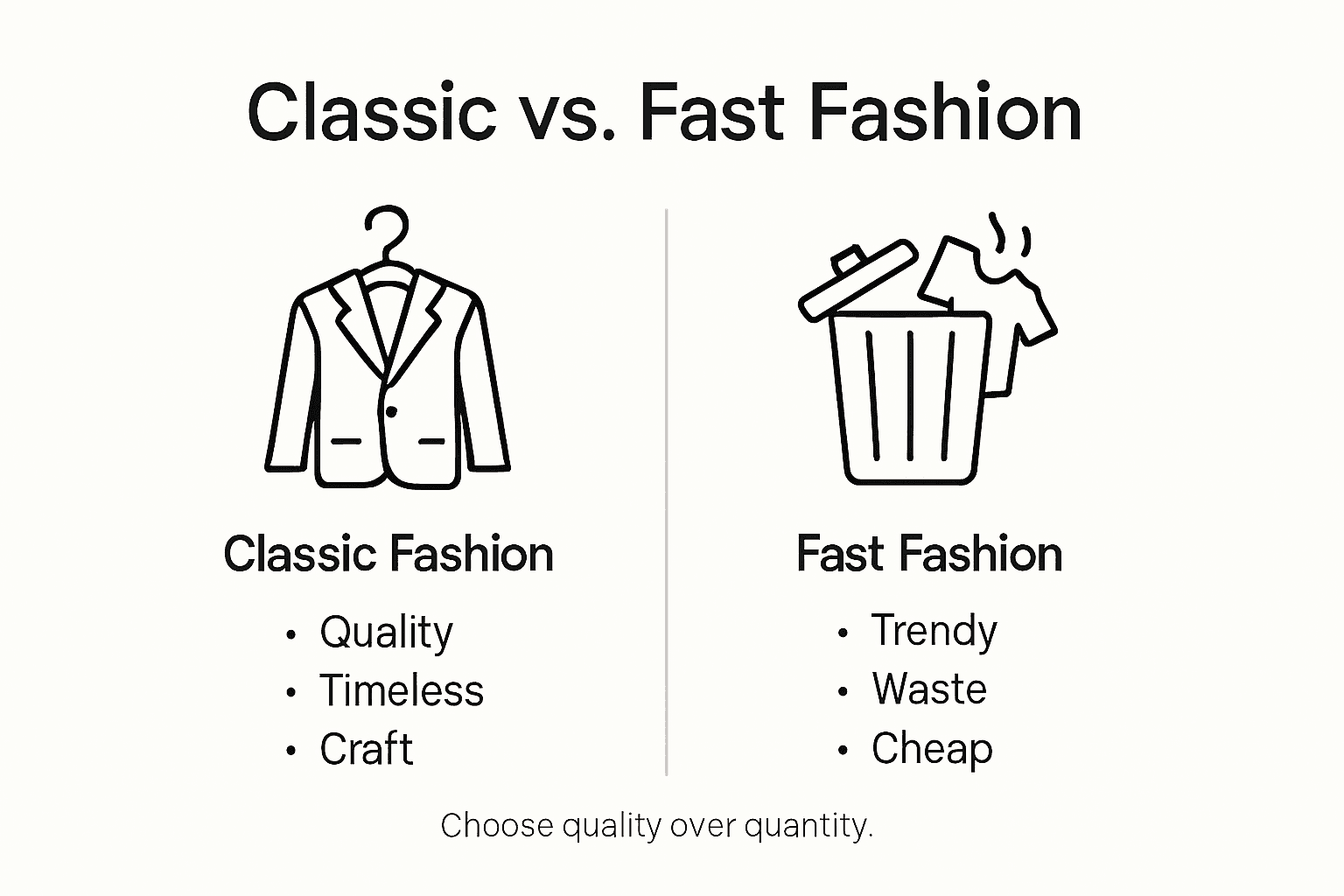
Beyond individual consumption patterns, fast fashion poses significant systemic risks. The industry’s reliance on low-cost manufacturing often involves exploitative labor practices, environmental degradation, and unsustainable production methods. Classic fashion challenges this model by emphasizing craftsmanship, ethical production, and long-term value. By prioritizing quality materials, precise construction, and timeless design, classic pieces represent a more responsible and considered approach to personal style and global fashion consumption.
Pro tip: Before purchasing any clothing item, ask yourself if it will remain stylistically relevant and well-constructed in five years, not just five weeks.
To better understand the core differences between classic and fast fashion, see this side-by-side comparison:
Attribute | Classic Fashion | Fast Fashion |
Design Approach | Timeless, enduring styles | Quick, trend-driven designs |
Fabric Quality | Natural, high-quality materials | Synthetic, inexpensive fibers |
Wardrobe Longevity | Worn for years or decades | Worn for weeks or months |
Cultural Impact | Honors heritage and craftsmanship | Promotes mass-market uniformity |
Environmental Effect | Minimizes waste and pollution | Contributes to landfill waste |
Personal Expression | Supports unique identity | Encourages short-term trends |
Classic Fashion’s Role in Personal Expression
Clothing serves as a profound technological medium for personal identity, transcending mere fabric and design to become a powerful language of self-expression. Classic fashion provides a sophisticated vocabulary through which individuals communicate their values, cultural heritage, and personal narratives without uttering a single word. Unlike trendy pieces that speak momentarily, timeless styles offer a nuanced, enduring dialogue about personal aesthetic intelligence and individual complexity.
The psychological architecture of classic fashion reveals how garments function as extensions of personal identity. When someone selects a tailored blazer, a perfectly cut shift dress, or an elegantly structured coat, they are making a deliberate statement about their inner landscape. 1960s fashion influences demonstrate how certain style choices can communicate rebellion, sophistication, or cultural belonging, illustrating fashion’s role as a dynamic form of nonverbal communication. These pieces become personal totems, representing not just aesthetic preferences but deeper psychological and emotional narratives.
At its core, classic fashion empowers personal expression through intentional design choices that prioritize individual interpretation over mass conformity. The true magic lies in how a timeless piece can be styled uniquely by different individuals, reflecting their personality while maintaining an underlying sense of refined elegance. By choosing classic pieces that resonate with personal aesthetics, women create a wardrobe that is simultaneously universal and intensely personal - a sartorial autobiography that evolves with their own journey.
Pro tip: Select classic pieces that not only flatter your body but also authentically reflect your inner narrative and personal values.
Discover Timeless Elegance That Lasts
Classic fashion is not just about style It is about embracing timeless value and meticulous craftsmanship that offer lasting confidence and authentic personal expression. If you seek to invest in luxurious womenswear that transcends fast fashion’s fleeting trends and truly honors sophisticated design principles explore the curated collections at Vivien Lauren. Here you will find elegant dresses handbags and accessories crafted in Italy using artisanal techniques passed down through generations designed specifically for women who value quality and enduring style.

Elevate your wardrobe today by choosing pieces that combine impeccable tailoring premium fabrics and versatile silhouettes Browse now at Vivien Lauren and enjoy benefits like free UK shipping on orders over £80 and convenient payment options including interest-free installments. Invest in fashion that speaks your story with sophistication Make your next purchase a timeless masterpiece before these exclusive designs are gone.
Frequently Asked Questions
What defines classic fashion?
Classic fashion is characterized by its emphasis on timeless elegance, quality craftsmanship, and the ability to transcend fleeting trends. It prioritizes enduring styles that celebrate individual expression while adhering to fundamental design principles.
How can I build a classic wardrobe?

To build a classic wardrobe, focus on investing in high-quality, versatile pieces like tailored blazers, shift dresses, and structured outerwear. Aim for neutral colors and impeccable tailoring to ensure maximum longevity and adaptability in styling.
What are the risks of fast fashion compared to classic pieces?
Fast fashion promotes a culture of quick consumption and disposable clothing, leading to significant textile waste and environmental harm. In contrast, classic pieces offer durability and style longevity, encouraging responsible consumer behavior and fostering individual expression through quality garments.
Why is craftsmanship important in classic fashion?
Craftsmanship is crucial in classic fashion as it ensures exceptional quality and durability. Well-constructed pieces made from high-quality materials not only last longer but also provide a sense of elegance and personal value, making them worthwhile investments in one’s wardrobe.
Recommended

This classic fashion piece has been written by Chloe, on behalf of Vivien Lauren.
Vivien Lauren. Luxury. Craftsmanship that's Proudly Italian. Vivien Lauren. Proud to Style.


