
China's Silk Innovation and Elegant Fashion Legacy
Updated: Jan 28

Most luxury silk items trace their roots back to ancient China, yet today, over 40 percent of upscale silk accessories purchased by American women are inspired by Italian craftsmanship.
For those who cherish refinement, the evolution of silk weaves a captivating story of cultural exchange, artistry, and personal style. Explore how this exceptional fabric transformed from an imperial secret into the foundation of modern fashion statements, connecting tradition with contemporary elegance.
Table of Contents
Key Takeaways
Point | Details |
Origins of Silk | Silk production originated in ancient China, becoming a significant cultural and economic achievement by the 4th millennium BCE. |
Silk Road Impact | The Silk Road facilitated the global exchange of silk, transforming it from a Chinese secret into a highly coveted commodity worldwide. |
Women in Silk Fashion | Ancient silk garments served as intricate social communication tools for women, reflecting personal identity and societal status through their designs. |
Technological Innovations | Silk creation involved advanced techniques, including multiheddle looms and complex dyeing methods, enhancing artistic expression and cultural significance. |
Origins of Silk: Discovery and Significance
The extraordinary journey of silk begins in ancient China, where silkworm larvae first transformed mulberry leaves into luxurious fabric, rather it was a transformation of mulberry leaves which they ate, into a very fine product from which a fine shiny super strong thread could be harvested. This thread in turn, would be laced up onto a loom, with skilled hands using this contraption to produce a fabric - which is the silk that we know. Nestled within the Neolithic Yangshao culture, silk production emerged as a groundbreaking technological and cultural achievement dating back to the 4th millennium BCE. These remarkable silkworms, specifically the Bombyx mori species, would become the architects of one of humanity’s most treasured textile innovations.
Silk’s significance extended far beyond mere clothing, representing a complex intersection of technological skill, artistic expression, and economic opportunity. The Chinese monopoly on silk production remained carefully guarded for centuries, with sericulture techniques passed down through generations of skilled artisans. The fabric’s exceptional qualities - its remarkable strength, incredible softness, and stunning luminosity - made it a symbol of luxury and sophistication across civilizations.
The global spread of silk production represents a fascinating narrative of cultural exchange and technological diffusion. As trade routes expanded, particularly with the establishment of the Silk Road around 114 BCE, silk transitioned from a closely protected Chinese secret to a globally coveted commodity. Different regions developed unique silk varieties, including wild silks like Tussar, Eri, and Muga, each carrying distinct characteristics reflective of local environments and cultural practices.
Here’s a summary of key historical types of silk and their unique attributes:
Silk Type | Geographic Origin | Distinctive Feature |
Mulberry | Ancient China | Fine, smooth, luxurious |
Tussar | South Asia | Coarse, golden sheen |
Eri | Northeast India | Soft, thermal, matte |
Muga | Assam, India | Bright yellow, durable |
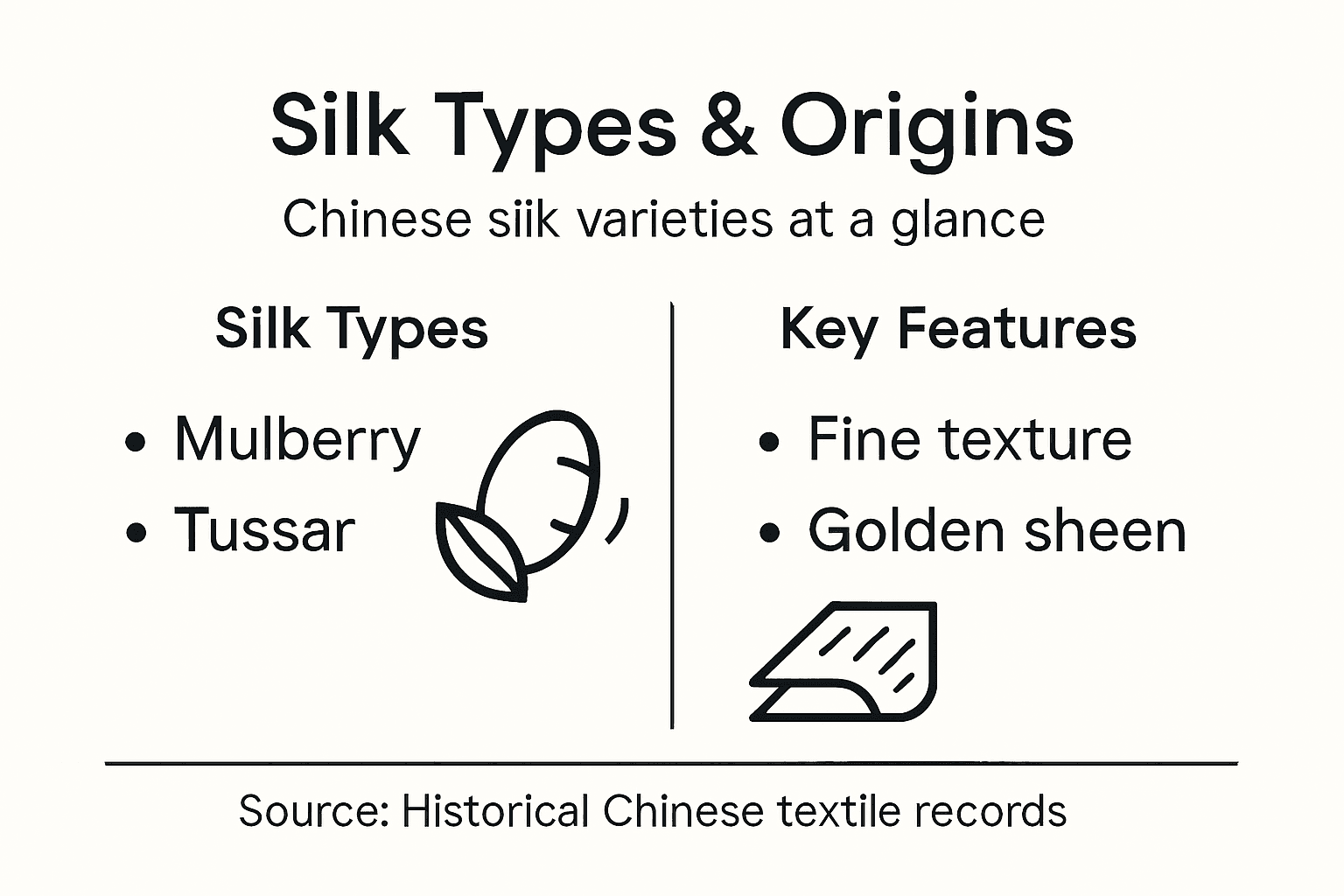
Pro tip: When purchasing silk, look for mulberry silk with a high momme weight for the most luxurious and durable fabric experience.
Silk Creation: Techniques and Embroidery Art
The intricate art of silk creation represents a profound intersection of technological precision and artistic expression. Ancient Chinese silk production techniques evolved through four critical developmental stages, transforming raw silkworm threads into exquisite textiles. These stages encompassed sophisticated sericulture methods, delicate hand silk reeling, advanced dyeing techniques, and the introduction of complex multiheddle patterning looms that enabled unprecedented fabric complexity.

Embroidery emerged as a sublime artistic practice, with techniques like kesi - a remarkable silk tapestry method - showcasing the extraordinary skill of artisan craftspeople. Weaving technologies advanced dramatically during dynastic periods like the Shang, Song, and Yuan, with craftsmen developing increasingly intricate methods of fabric decoration. Artisans utilized mineral and vegetable-based pigments to create vibrant color palettes, while innovative looms like the Jacquard enabled unprecedented design intricacy.
The cultural significance of silk creation extended far beyond mere textile production. Each thread represented a delicate narrative of technological innovation, artistic expression, and cultural exchange. Different regions developed unique embroidery styles, with techniques passing through generations, transforming silk from a simple fabric into a canvas of human creativity. Specialized weaving methods allowed for both warp-faced and weft-faced silk fabrics, each presenting distinct textural and visual characteristics that reflected the nuanced skills of their creators.
To clarify silk creation, here are the main weaving and embroidery innovations and their cultural impacts:
Innovation | Era or Region | Cultural Impact |
Multiheddle Looms | Song/Yuan Dynasties | Enabled complex textile patterns |
Kesi Silk Tapestry | Ancient China | Preserved narrative artistry |
Mineral/Pigment Dyeing | Across Asia | Expanded color symbolism |
Jacquard Loom | 19th-century Europe | Revolutionized design possibilities |
Pro tip: When exploring traditional silk embroidery, look for pieces that showcase multiple weaving techniques and color transitions to appreciate the true craftsmanship of the artisan.
Silk Road Trade and Global Impact
Ancient trade networks transformed silk into a global economic phenomenon, connecting distant civilizations through an intricate web of cultural and commercial exchange. The Silk Road emerged as more than a mere trade route, representing a sophisticated conduit of technological knowledge, artistic innovation, and diplomatic relationships. Spanning thousands of miles from China through Central Asia to Europe, this remarkable network facilitated the transmission of not just textiles, but ideas, religions, and technological advancements.
During the Han Dynasty, silk transitioned from a local Chinese commodity to an international luxury symbol. China’s exclusive silk production techniques became a powerful diplomatic and economic tool, with silk serving as both a valuable export and a medium of cultural diplomacy. Merchants and diplomats carried these exquisite fabrics across continents, creating complex economic relationships that would reshape global trade dynamics for centuries. The textile was so prized that it became a form of currency, used in diplomatic negotiations and as a marker of social status.
Beyond economic exchange, the Silk Road facilitated unprecedented cultural cross-pollination. Archaeological evidence reveals how silk artifacts found in distant regions told stories of human connection, technological transfer, and artistic inspiration. Different civilizations adapted silk production techniques, creating unique regional variations that reflected local aesthetic sensibilities. The trade route was not just about commerce, but about the human impulse to explore, exchange, and understand different cultures through the delicate threads of silk.
Pro tip: When collecting historical textiles, examine the weave, color, and patterns to understand the cultural origins and trade routes of ancient silk pieces.
Silk Families and Merchant Collaborations

Silk families formed intricate networks of economic and cultural exchange, transforming textile production from a simple craft into a sophisticated global enterprise. These remarkable family dynasties were not merely producers of fabric, but custodians of generational knowledge, preserving complex weaving techniques and artistic traditions that had been carefully refined over centuries. Each family represented a living repository of skills, with trade secrets and craftsmanship passed meticulously from one generation to the next.
Merchant collaborations expanded silk’s economic and cultural influence across diverse geographic regions, creating unprecedented economic opportunities. Strategic partnerships between silk-producing families and international merchants facilitated technological innovation and cultural dialogue. Particularly notable were the connections between silk families in regions like Mount Lebanon and European textile centers such as Lyon, where technological exchanges sparked social transformations and empowered artisan communities, especially women who became integral to the silk production process.
These familial and merchant networks were more than economic institutions; they were complex social ecosystems that maintained cultural continuity and technological innovation. Silk families developed sophisticated communication systems, sharing knowledge about emerging techniques, market trends, and artistic innovations. Their collaborative approach ensured that silk remained not just a commodity, but a dynamic, evolving art form that reflected the nuanced cultural exchanges of its time. The relationships between silk families and merchants transcended simple economic transactions, representing a profound human story of creativity, resilience, and interconnectedness.
Pro tip: Research the historical background of silk-producing families to understand the rich cultural narratives woven into each textile piece.
Early Women’s Fashion in Silk History
Ancient Chinese silk garments represented sophisticated fashion systems that transcended simple clothing, serving as intricate social communication tools for women across different societal strata. During the Shang and Zhou dynasties, silk became more than a textile - it was a canvas of cultural expression, with each garment meticulously crafted to communicate status, personal identity, and artistic refinement. Elite women particularly leveraged silk’s unique properties, using vibrant dyes and elaborate embroidery to distinguish themselves.

Silk robes embodied complex cultural symbolism for women in ancient Chinese society, with each garment telling a nuanced story of social positioning and personal aesthetic. Embroidered motifs like dragons and phoenixes were not merely decorative elements but powerful narrative devices that communicated familial lineage, personal aspirations, and spiritual connections. Women’s silk fashion represented a delicate balance between artistic expression and social conformity, with each stitch and color selection carefully considered to reflect deeper cultural meanings.
The craftsmanship behind women’s silk fashion was a remarkable testament to female skill and creativity. Women were not just consumers of fashion but active creators, participating in intricate weaving, dyeing, and embroidery processes that transformed raw silk into wearable art. Their techniques were passed through generations, preserving cultural knowledge and artistic traditions that went far beyond simple clothing production. These silk garments became living historical documents, capturing the aesthetic sensibilities, technological capabilities, and social dynamics of their respective eras.
Pro tip: When studying historical silk fashion, examine the embroidery techniques and symbolic motifs to understand the deeper cultural narratives embedded in each garment.
Experience the Timeless Elegance of Silk Inspired Fashion
Unlock the legacy of China’s silk innovation and exquisite craftsmanship through your wardrobe. The article highlights the intricate artistry and cultural significance behind silk, yet finding modern fashion that truly honors this heritage can be challenging. You deserve more than ordinary apparel — you need pieces that echo the sophisticated softness, durability, and storytelling tradition that silk symbolizes.
At Vivien Lauren, we embrace these timeless values. Our curated collections of elegant women’s dresses and accessories blend classic craftsmanship passed down through generations with contemporary style. Each garment is designed to offer softness, luxury, and unique details much like the embroidered masterpieces and luxurious fabrics of ancient silk production.
Discover fashion that connects history to your personal expression today.
Elevate your style with pieces inspired by centuries of silk craftsmanship.

Explore the full collection at Vivien Lauren and step into refined luxury that stands the test of time. Experience free UK & international shipping on qualifying orders and take advantage of flexible payment options for your convenience. Your wardrobe deserves the elegance and exclusivity crafted for modern women who appreciate legacy and quality. Visit Vivien Lauren now and wear your story.
Frequently Asked Questions
What are the different types of silk and their characteristics?
Silk types include Mulberry, known for its fine and luxurious feel; Tussar, which has a coarse texture and golden sheen; Eri, recognized for its soft and thermal properties; and Muga, noted for its bright yellow color and durability.
How does silk production reflect technological innovation?
Silk production involves complex techniques such as sericulture, hand silk reeling, dyeing, and advanced weaving methods. These innovations allowed artisans to create intricate textiles that embody both technological skill and artistic expression.
Why was silk considered a luxury item in ancient cultures?
Silk’s exceptional qualities, such as its strength, softness, and sheen, made it a status symbol. It was not only a commodity in trade but also a medium for cultural diplomacy and artistic representation, illustrating its importance in social hierarchy.
How did women contribute to the legacy of silk fashion?
Women were pivotal in the creation of silk garments, participating in weaving, dyeing, and embroidery processes. Their craftsmanship and the symbolic motifs in their designs reflected personal identity and societal status, highlighting their role in shaping silk’s elegant fashion legacy.
Recommended

This historical fashion piece on
China's innovations which brought about luxury in fashion - silk, was brought to you by Sammy Li. On behalf of Vivien Lauren.
Vivien Lauren. Luxury. Craftsmanship that's Proudly Italian. Vivien Lauren. Proud to Style.


